
The Government of the Canary Islands has formally initiated a plan to restrict the sale of homes to non-residents, a significant policy shift aimed at tackling a severe regional housing crisis. The move, which directly targets market pressures created by foreign investment, acknowledged as the epicentre of the island’s affordability problem. The government’s action transitions the debate from public protest to official policy, creating significant uncertainty for the property market and all associated sectors.
|
----- Google provide a way for you to
|
On September 2nd, the Canary Islands Government, led by President Fernando Clavijo, in coordination with the Canarian Federation of Municipalities (Fecam), announced the formation of a joint working group. The group’s explicit mandate is to develop the legal mechanisms required to empower municipal governments to regulate and limit the acquisition of property by individuals or entities not primarily resident in the Canary Islands.
This policy is a direct response to a market where local residents have been progressively priced out. While the initiative is archipelago-wide, the focus of the problem on Gran Canaria is sharpest in the touristed southern municipalities. Areas such as Mogán (including Puerto Rico de Gran Canaria and Arguineguín) and San Bartolomé de Tirajana (Playa del Inglés, Maspalomas) have become prime examples of this market dislocation.
The Data
The government’s intervention is underpinned by clear statistical evidence of a superheated and foreign-driven market:
Sales Volume: In the first quarter of 2025, property sales in Mogán and San Bartolomé de Tirajana increased by 33.3% and 38.1% respectively, compared to the previous year.
Price Disparity: Average property prices in these prime southern zones now exceed €4,500 per square meter. This is fundamentally disconnected from the local economy, where the average monthly salary is approximately €1,600.
Foreign Ownership Scale: Data from the National Statistics Institute (INE) for 2025 shows that 227,659 foreign tourists who visited the islands in the first seven months of the year stayed in their own properties. This highlights the scale of housing stock owned by non-residents for temporary use.
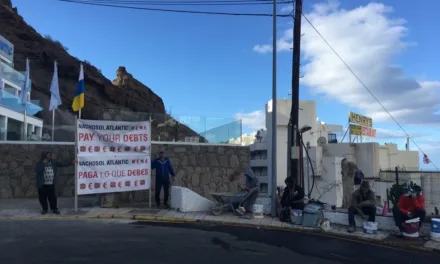
These factors culminated in the mass public demonstrations earlier this year under the banner “Canarias Tiene un Límite” (The Canaries Have a Limit), which provided the political impetus for the government to act.
Who’s affected?
The proposed regulations will impact several distinct groups, creating a complex social and economic landscape.

-
Local Residents: The primary intended beneficiaries are local workers and young people. A hospitality worker in Maspalomas earning a standard wage cannot compete in a rental market where apartments command €900 per month or more. The lack of affordable housing forces essential personnel such as healthcare workers, teachers, and police officers into long commutes, creating a sustainability issue for the island’s core services. The government’s plan aims to alleviate this pressure by cooling the market.
-
Foreign Residents and Retirees: This group includes thousands of EU citizens who have legally purchased homes in Gran Canaria for their retirement or as their primary residence. They are registered residents, pay local taxes, and contribute to the community. This demographic is concerned that the new measures, while aimed at non-resident investors, could create a climate of hostility or financial penalties that unfairly affect their legitimate investments and chosen way of life.
-
Local Canarian Property Owners: The Canary Islands Vacation Rental Association (ASCAV) represents many local families who own a second property as an investment or for personal use. This group feels it is being caught in the crossfire. ASCAV has already criticised the government’s regulatory approach as “harassment,” arguing that it punishes small-scale local investors while failing to address the larger issues of housing supply.
-
The Real Estate and Construction Sectors: These industries are heavily reliant on foreign investment. Real estate agencies, legal firms specialising in property conveyance, construction companies, and a wide array of maintenance and service providers view the plan as a direct threat to their business models. They warn that a significant downturn in foreign investment could trigger job losses and a broader economic slowdown.
What Happens Next: Implementation
The path to implementing these restrictions is legally and politically complex. An outright ban on property purchases by EU citizens is prohibited under the EU’s principle of free movement of capital. Therefore, the working group will focus on creating legally defensible regulations. The process will likely unfold in several stages:
-
Legislative Amendment: The working group’s primary task is to draft a proposal to amend Spain’s national Local Regime Law (Ley de Régimen Local). This amendment is the crucial step that would delegate authority over housing acquisition rules to local municipalities. This will require approval in the Canarian Parliament and will likely face political and legal challenges from Madrid and opposition parties.
-
Introduction of Fiscal Disincentives: This is the most probable first-line policy action due to its simpler implementation. The government could introduce a substantially higher Property Transfer Tax (ITP) for non-resident buyers. For example, raising the ITP from the current 6.5% to a rate of 15-20% for any buyer who cannot prove fiscal residency for a specified period would immediately deter short-term speculative investment. Revenue generated from this higher tax could be earmarked for social housing projects.
-
Implementation of Conditional Purchase Schemes: The government is examining models used in other EU regions, such as Malta. This could lead to a system where non-residents must apply for a permit to purchase property. Approval could be subject to certain conditions, such as:
-
A minimum property value, ensuring that entry-level and mid-market housing is reserved for residents.
-
A commitment to use the property as a primary residence, restricting buy-to-let investments.
-
Requirements linked to local employment or long-term residency.
-
-
Anticipated Market Reaction: The immediate market response is expected to be twofold. In the short term, the announcement may trigger a “rush to buy” as non-resident investors attempt to complete purchases before new regulations take effect. Following this, a period of significant market uncertainty is expected. This “political risk” will likely deter new investment, leading to a stabilization or cooling of prices in the medium term as the market waits for legal and fiscal clarity.
The Canary Islands government has made a definitive move to intervene in its housing market, shifting from a policy of encouraging foreign investment to one of actively managing its consequences. The focus will be on Gran Canaria, where the economic and social pressures are most acute. The process will be complex and will face legal challenges, but the political will to act is now firmly established. For property owners, potential investors, and local residents, the coming months will be a critical period of observation as the specific details of this new regulatory framework take shape, defining the future of Gran Canaria’s property market for years to come.