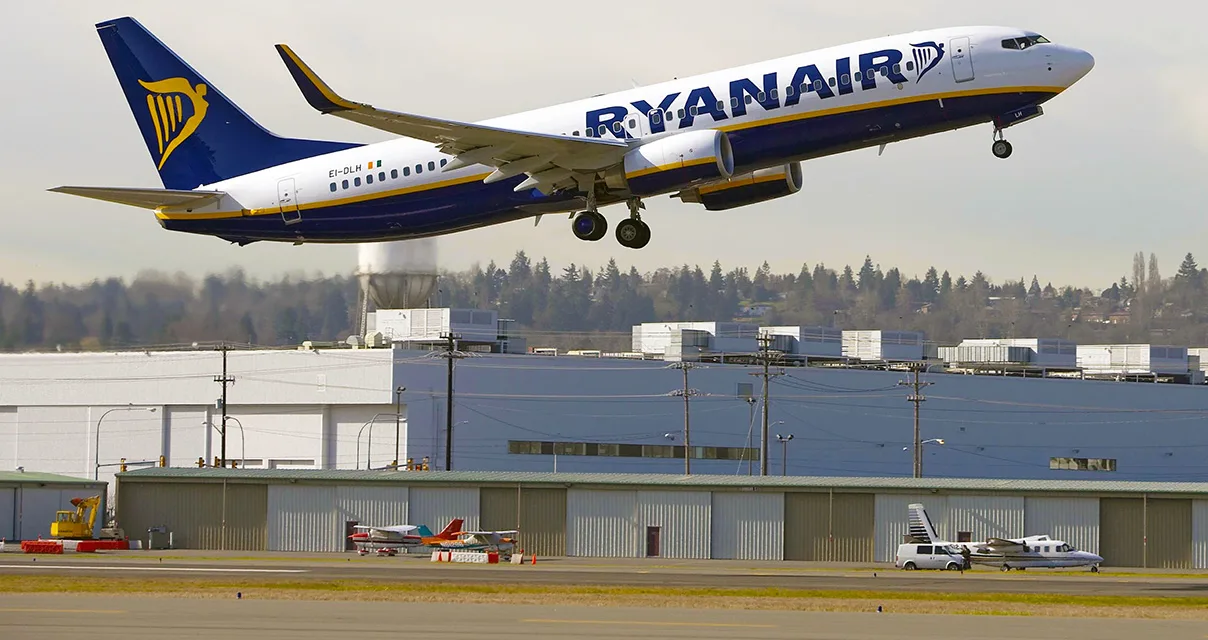
Ryanair has announced a major reduction in its Spanish operations for the winter 2025 season, cutting 400,000 seats in the Canary Islands and cancelling all flights to Tenerife North. The move will reduce the airline’s capacity in the islands by 10% and raises concerns about how future cuts could affect Gran Canaria’s connectivity and tourism.
|
----- Google provide a way for you to
|
What Ryanair is doing
The airline confirmed on 3 September that it will:
-
Cancel all flights to Tenerife North airport.
-
Cut 400,000 seats across the Canary Islands this winter, equivalent to a 10% drop in capacity.
-
Remove a total of 36 direct connections with Spain’s regional airports, part of a nationwide reduction of up to two million seats annually.
Ryanair says the decision is in response to airport fee increases by Aena, which the airline calls “excessive and uncompetitive.” The carrier is diverting capacity to countries such as Italy, Morocco, Croatia, and Albania, where it says charges are lower and growth is actively encouraged.
Impact on Gran Canaria
Gran Canaria is not losing its Ryanair base, but a 10% capacity cut still means fewer flights into and out of the island. For the archipelago’s most populous island, which welcomed over 4.4 million international visitors in 2024, Ryanair plays a key role: roughly one in three tourists arrive on its flights.
While Tenerife North loses all Ryanair services, observers warn that Gran Canaria could face further reductions if airport fees continue to rise. Ryanair has 300 new aircraft on order and intends to assign them “where conditions are more competitive.”
For winter 2025, the cuts mean fewer options for budget travellers heading to Gran Canaria and potentially higher prices on remaining flights.
How much of Gran Canaria’s traffic depends on Ryanair?
1 in 3 tourists arriving in Gran Canaria use Ryanair flights.
The airline operates from Gando Airport (LPA) as one of its key Canary hubs.
In 2024, Gran Canaria handled more than 15 million passengers; Ryanair carried roughly 5 million of them.
Routes cover major source markets: UK, Ireland, Germany, Scandinavia, Italy, and mainland Spain.
Cuts of 10% in capacity this winter could mean a loss of around 500,000 passenger seats for Gran Canaria if reductions are evenly spread.

Why it matters: Any further scaling back by Ryanair would not only affect ticket prices and choice for visitors, but also hospitality businesses and jobs that depend on affordable, frequent air connections.
A record year meets capacity cuts
The timing comes just as the Canary Islands report record visitor numbers. The region received nearly 18 million international tourists in 2024, with Gran Canaria itself handling more than 15 million passengers at Gando airport.
This growth has strained infrastructure and sparked protests about “overtourism,” but airlines cutting routes could threaten connectivity and employment in tourism-dependent islands.
Ryanair CEO Eddie Wilson has warned that unless Spain adjusts its policy, more regional airports could be downgraded in coming years. “In the next 5 to 10 years, many of these airports will close,” he said, blaming Aena’s fee increases of 6.62% from 2025.
Can we expect more moves like this?
Yes. Ryanair is making clear that its strategy is fluid and competitive. The airline has:
-
Shut or reduced operations at Santiago de Compostela, Vigo, Valladolid, Jerez, Zaragoza, Santander, Asturias, and Vitoria.
-
Repeatedly stated it will shift aircraft “where the costs are lowest” and away from markets it sees as uncompetitive.
-
Already identified Italy, Morocco, and Eastern Europe as growth areas at the expense of Spain’s regional airports.
Unless there is a change in airport fee policy, further seat cuts in the Canaries are likely. Gran Canaria could face more pressure if Ryanair reallocates aircraft to mainland hubs like Málaga and Alicante, which it says remain “more competitive.”
What this means for Gran Canaria
-
Tourists: Potentially fewer low-cost options this winter, with some pressure on fares.
-
Businesses: Hospitality and service sectors could feel the pinch if budget travellers shift to competing destinations.
-
Airports: Gando (LPA) remains a core hub, but the warning is clear: airlines will follow incentives, not loyalty.
For an island economy where tourism accounts for 35% of GDP and nearly 40% of jobs, the balance between record arrivals and threatened connectivity is a new challenge.